
Repiping Services in Loveland, CO
Homes built before 1980 often still run original galvanized steel pipe. Here’s when it’s time to upgrade to PEX.
Call (970) 559-6466Key Takeaways
- Homes built before 1980 often still have original galvanized steel pipe, which corrodes from the inside over decades.
- Signs include gradually declining water pressure, rust-colored water, and repeated pinhole leaks in different spots.
- A full repipe with modern PEX typically takes 2–4 days and costs $4,000–$15,000+ depending on home size.
- Water is usually only shut off during work hours and restored each evening — most homeowners aren’t without water overnight.
- Repeated pinhole leaks are usually cheaper to fix with one full repipe than a series of emergency spot repairs.
Real Loveland Case Study
Frozen & Burst Pipe — Older Home Near Downtown Loveland
A homeowner in a pre-1980 home near downtown Loveland lost water pressure during a hard freeze. The cause: a section of original galvanized pipe had frozen and split inside a wall cavity, undetected until it thawed.
Read the full case study on our homepage →On This Page
Why Galvanized Pipe Is a Problem
Galvanized steel pipe was standard before PEX became the norm in Loveland. Decades later, the interior corrodes and narrows from mineral buildup — worsened by the area’s moderately hard water. The result is declining water pressure, rust-colored water, and pipe brittle enough to crack, especially where it freezes in winter.
Signs You May Need a Repipe
- Rust-colored water, especially after the tap has been off
- Water pressure gradually worsened over years
- Visible corrosion on exposed pipe
- Frequent pinhole leaks in different spots
- Home built before 1980, never updated
What’s Included in a Repipe
- Full inspection of existing pipe to confirm material, condition, and scope before we quote the job
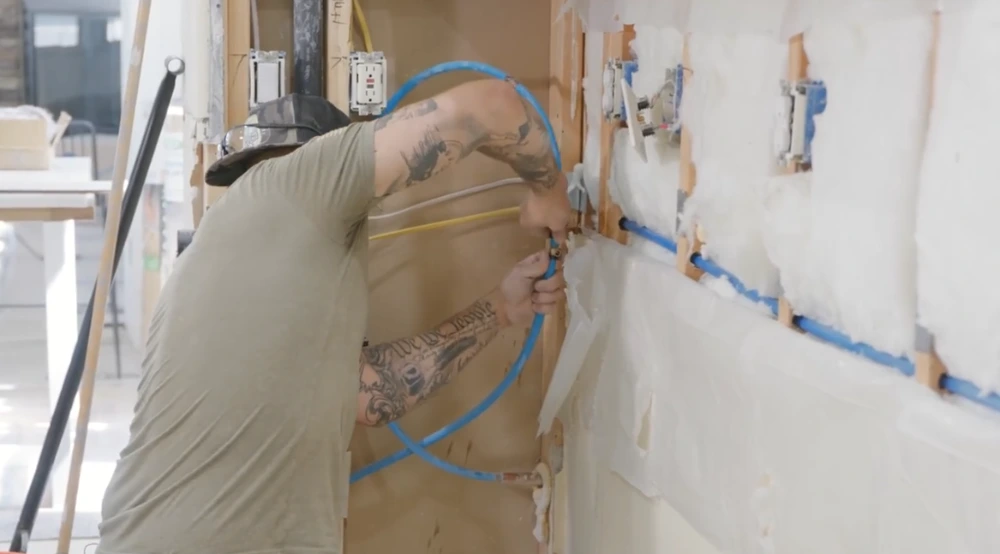
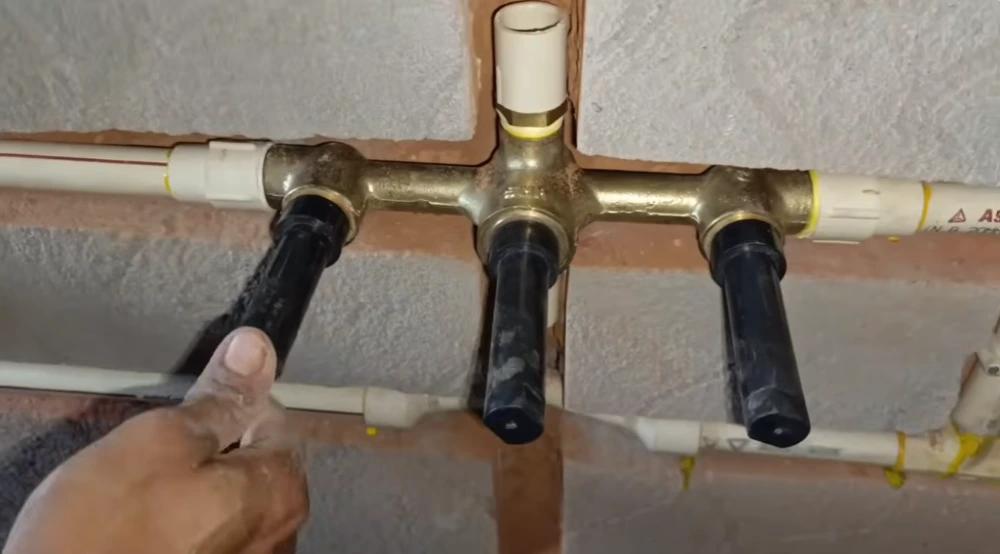
- New PEX supply lines run through walls, crawl spaces, and attic where needed
- Removal of old galvanized pipe as sections are replaced
- Drywall patching at access points we opened (paint and texture matching handled separately unless otherwise arranged)
- Pressure testing of the new system before we consider the job complete
- A final walkthrough confirming water pressure and flow at every fixture
How We Access Your Walls Without Unnecessary Demolition
A common concern with repiping is how much of the house needs to be opened up. In most cases, we access wall cavities through targeted openings sized to the work needed, not a full wall removal. Where pipe runs vertically inside a wall, we typically need one opening near the top and one near the bottom rather than removing the whole section.
Attic and crawl space access lets us route a significant amount of new PEX without opening walls at all, since PEX is flexible enough to run through joist bays and along existing paths more easily than rigid copper or galvanized pipe ever could. This is one of the practical advantages of PEX beyond its corrosion resistance, it genuinely reduces how much of your home needs to be disturbed during the project.
Permits for Repiping in Loveland
Whole-home and most partial repiping jobs require a permit through the City of Loveland or Larimer County, depending on your property’s location. This typically includes a rough-in inspection before walls are closed and a final inspection once the work is complete. We handle the permit application and coordinate inspection scheduling as a standard part of the project, factored into the timeline we give you upfront.
Full vs. Partial Repipe
Partial repipe replaces just the affected section — practical if damage is localized to one area.
Full repipe replaces all galvanized supply lines with modern PEX — the better long-term choice once corrosion is widespread.
What Happens If You Wait
More frequent emergency calls
Once one section of galvanized pipe fails, nearby sections are aging on the same timeline — expect more pinhole leaks, not fewer, as time passes.
Higher total cost
Three or four individual emergency spot repairs, each with its own service call and after-hours risk, often costs more in total than one planned full repipe.
Water damage risk grows
A pinhole leak inside a wall can go unnoticed for weeks, causing mold and structural damage well before a spike in your water bill tips you off.
How to Prepare for a Repipe
- Clear access to walls and crawl spaces where we’ll need to work — move furniture away from affected walls ahead of time if you can
- Plan around water shutoffs during work hours — water is typically restored each evening, but expect it to be off during the day
- Arrange pets and kids away from work areas, especially where drywall will be opened
- Set expectations for noise and dust — we contain it as much as possible, but it’s a multi-day project with real construction activity
- Ask about drywall patching upfront so you know exactly what’s included versus what you’ll need to paint or finish yourself
How Long Does a Repipe Take?
| Job Size | Typical Duration |
|---|---|
| Partial repipe (single area) | 1 day |
| Small home, full repipe | 2–3 days |
| Larger home, full repipe | 3–4 days |
Repiping FAQs
Will repiping fix low water pressure throughout my whole house?
In most cases, yes, if the low pressure is caused by corroded or scaled galvanized pipe. If pressure issues stem from something else — like a failing pressure regulator or a municipal supply issue — we’ll identify that during the initial inspection rather than assume repiping is the fix.
Do you repipe drain lines too, or just water supply lines?
Our repiping service primarily addresses water supply lines, which is where galvanized pipe corrosion causes the most common issues. Drain line replacement is a related but separate scope — if your cast iron drain lines also need attention, we’ll discuss that as part of the same inspection.
How long does a full repipe take?
Most whole-home repipes take 2–4 days depending on the home’s size and layout.
Will I have water during the repipe?
Water is typically shut off only during active work hours and restored each evening.
What does repiping cost in Loveland?
Typically $4,000–$15,000+. See our full cost guide.
Do I need to be home during the repipe?
You don’t need to be present for the entire job, but we’ll want to walk through the scope with you at the start and do a final walkthrough when it’s complete to confirm everything’s working properly.
Will repiping increase my home’s value?
Updated plumbing is a genuine selling point, especially for buyers who know to ask about galvanized pipe in older homes. It can also help with insurability, since some insurers flag homes with original galvanized supply lines.
What does repiping cost in Loveland?
Typically $4,000–$15,000+. See our full cost guide.
PEX vs. Copper: What We Use and Why
We use PEX for most repipe jobs in Loveland. It’s flexible, resistant to the mineral scale that plagues galvanized and even copper pipe in hard water areas, and far less likely to crack in a freeze since it can expand slightly instead of splitting.
Copper is still a solid option and required by some local codes in specific applications — we’ll tell you if that applies to your situation before recommending a material.
Related Services
Serving Loveland & Surrounding Areas
Proudly serving ZIP codes 80537 and 80538, and these neighborhoods:
What Happens to Your Old Pipe
Removal
Old galvanized sections are cut out and removed as each part of the home is repiped, rather than left in place behind the new lines.
Responsible Disposal
Steel pipe is scrap-metal recyclable, and we handle disposal as part of the job — nothing left behind for you to deal with.
Daily Cleanup
Work areas are cleaned at the end of each day, not just when the whole project wraps — you’re not living in construction debris overnight.
Final Walkthrough
Before we call the job done, we walk every access point with you so you know exactly what was opened and patched.
LovFlow Plumbing Co. · 1208 S Cleveland Ave, Loveland, CO 80537
PEX vs. Copper for Loveland Homes
Choosing between PEX and copper is the most common question in a repiping project. Both are used across Loveland homes, and the right choice depends on your specific situation:
For most Loveland homes, especially given our freeze-thaw winters, we lean toward recommending PEX for supply lines — but we’ll walk through both options and their tradeoffs for your specific home before you decide.
How Long a Repipe Actually Takes
A whole-house repipe is a bigger project than most plumbing work, and knowing the real timeline helps with planning:
- Single-story home, 2 bathrooms: Typically 2–3 days
- Two-story home, 2–3 bathrooms: Typically 3–5 days
- Larger homes or those with limited access (finished basements, slab foundations): Can extend to a week or more
Water is typically off only during active working hours each day, restored each evening — you’re not without water for the full project duration.
Budgeting for a Repipe
Repiping is a significant expense, and we understand most homeowners aren’t budgeting for it as a planned purchase. A few things worth knowing:
- Get a written, itemized quote before committing — the total should break down material, labor, drywall patching, and permit costs separately.
- Ask about phased repiping if the full cost is a barrier — some homes can be repiped in sections (bathrooms first, then kitchen) rather than all at once.
- Check if your situation qualifies for insurance involvement — if repiping follows documented pipe failures or leaks, some policies partially cover it.
More Repiping Questions
Can I stay in my home during a repiping project?
Yes, most homeowners stay throughout. Water is off during working hours each day but restored each evening, and we work room by room rather than disrupting the whole house at once.
Will repiping require cutting into my walls and ceilings?
Some access points are usually needed, but we minimize them and use techniques that limit drywall damage where possible. Any necessary patches are typically ready for your painter afterward.
How do I know if I need a full repipe or just a partial one?
If failures are isolated to one section (like all upstairs fixtures) while the rest performs fine, partial repiping may be sufficient — we assess the whole system’s condition, not just the symptom, before recommending scope.
Does repiping increase my home’s resale value?
It can, particularly for buyers who’d otherwise be wary of visible galvanized pipe or a home inspection flagging aging plumbing — it’s often a selling point in older Loveland neighborhoods.
Serving Every Loveland Neighborhood
We provide repiping across every Loveland neighborhood, and the housing stock varies enough between areas that it’s worth knowing what’s typical where you live:
Older housing stock, more likely to have galvanized supply lines and cast iron drains that affect this type of work.
Newer construction, generally current code compliance, though builder-grade fixtures wear faster than expected.
Mixed-age housing near the golf course area, generally well-maintained but with some homes reaching the age where original systems need attention.
Some properties on well and septic systems rather than municipal service, which changes certain considerations for this work.
See our full areas we serve page for details on all five Loveland neighborhoods we cover.
A Few More Questions
Do you handle the drywall patching after repiping, or do I need a separate contractor?
We handle access-point patching as part of the job; a final paint match is typically the homeowner’s responsibility since paint colors vary.
Is repiping ever an emergency, or always a planned project?
Usually planned, though if you’ve had multiple recent pipe failures in different spots, treating it with more urgency is reasonable to avoid ongoing emergency repairs.
Why Full-System Assessment Matters
Before recommending a repipe, we assess the entire system rather than just the pipe that failed — supply lines, drain lines, and the water heater connection. This matters because replacing one section while leaving adjacent galvanized pipe in place often just relocates the next failure a few years out, rather than solving the underlying age problem.
Related Reading
PEX vs. Copper: Which Should You Choose? →A detailed comparison covering cost, freeze resistance, and long-term lifespan.